

Hand Winches
Durable Hand Winches by Bear Equipment
Bear Equipment now stocks hand winches for manual pulling and lifting applications. With a wide range of styles and load capacities, we likely have a winch to fit your needs. Our expert engineering staff will review your application/needs and recommend the appropriate hand winch to make sure you get what you need.
See the chart below for an overview of the various hand winches offered and click on a specific winch to find out more information and to request a quote.
Hand Winch Comparison Chart
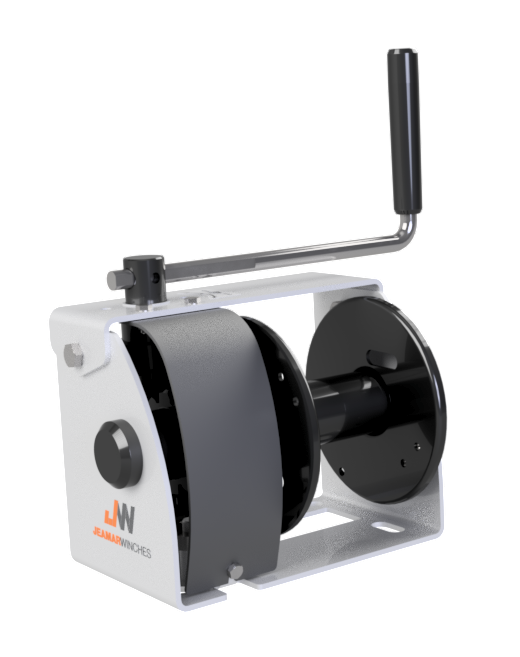
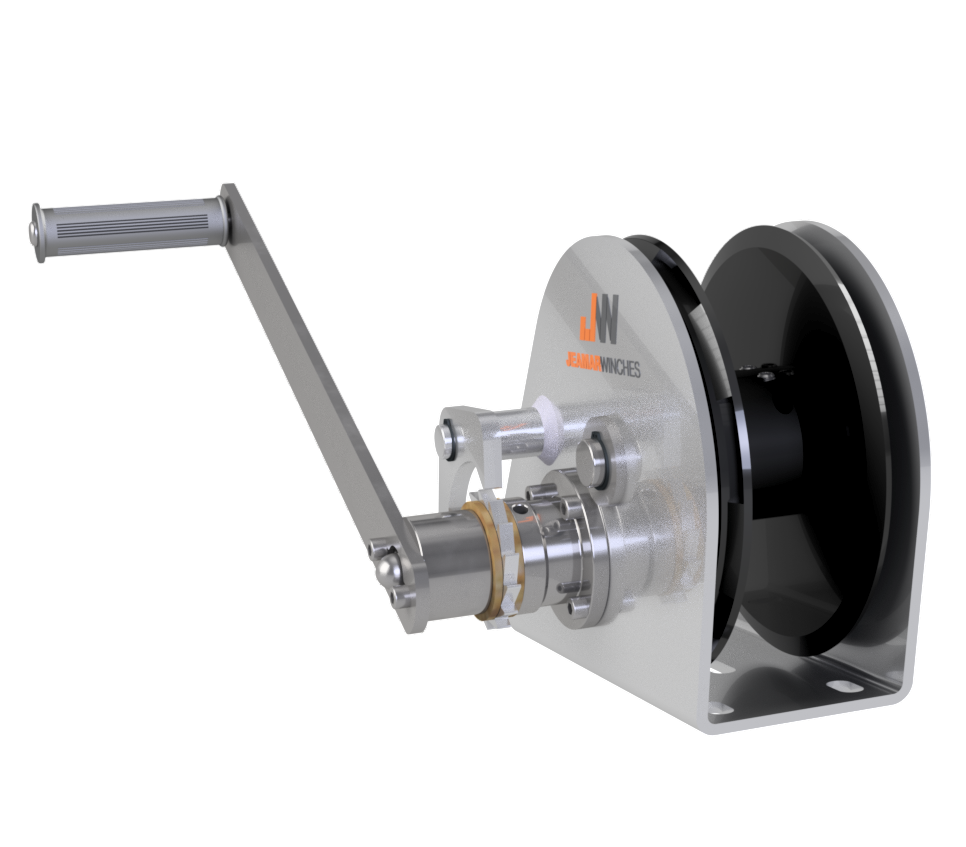
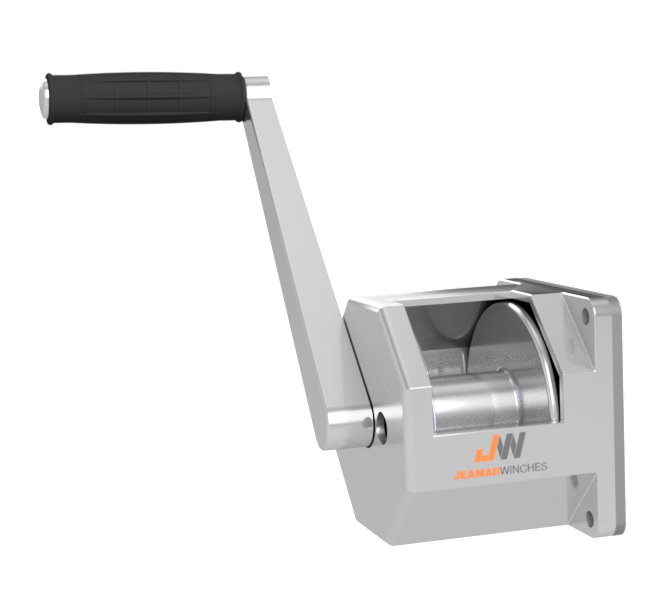
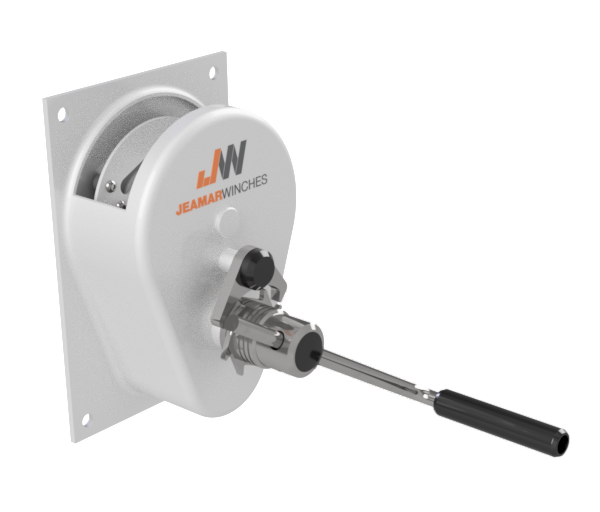
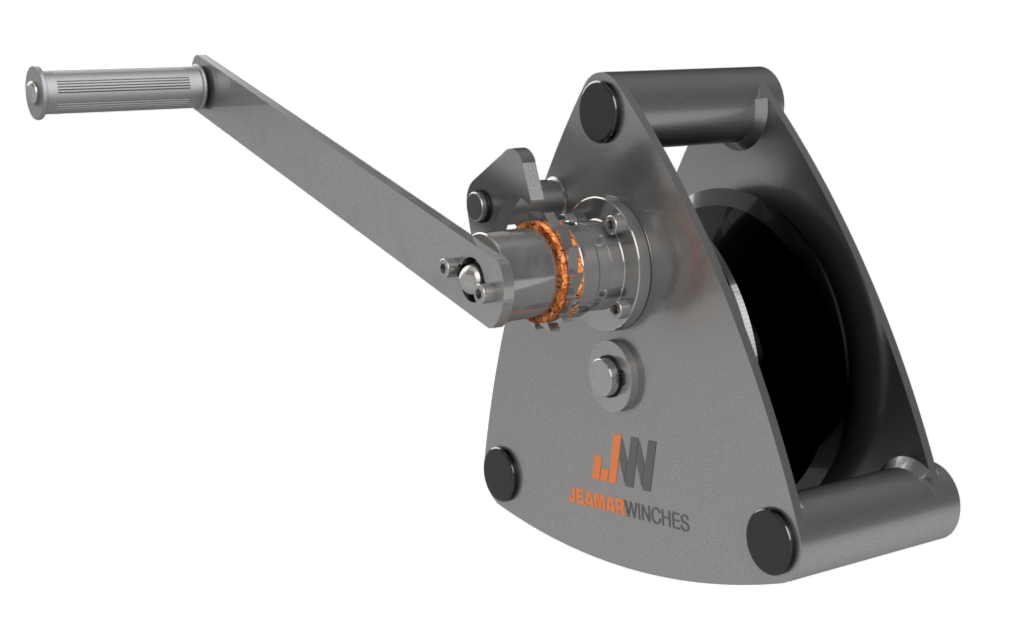
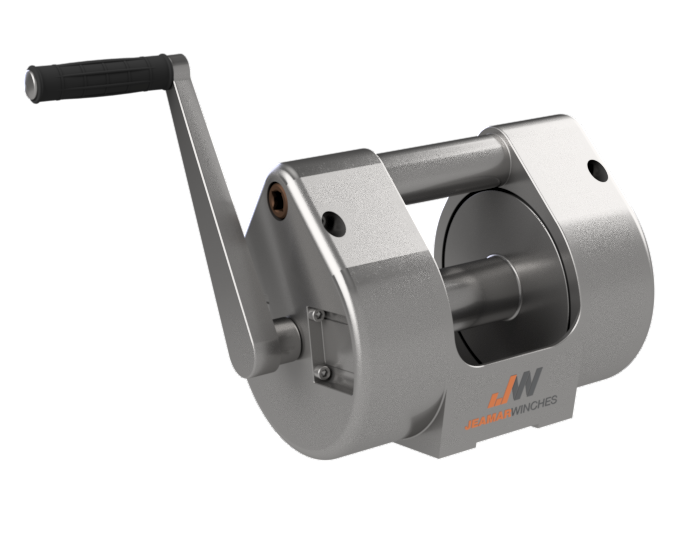
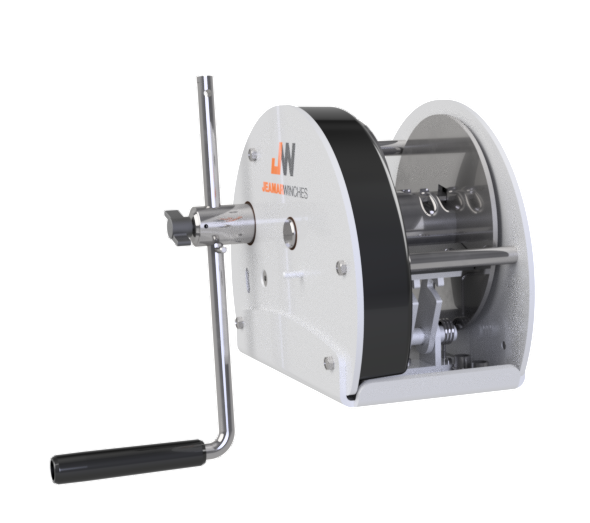
Series
GW
CMG/CMS
WMA
GS
WMG
CMA
GC
WLL (LBS)
550-11,000
330-3000
175-275
275-2200
660-2200
440-1760
1500
DRIVE
worm / spur
spur / direct
direct
spur
spur
chain
spur
MATERIAL
Steel
Steel / Stainless
Aluminum
Steel
Steel
Aluminum
Steel
FINISH
Painted
Galvanized / Uncoated
Uncoated
Painted
Galvanized
Uncoated / Painted
Painted
MOUNTING
Wall / Console
Console
Wall
Wall / Console
Wall
Console
Console
BRAKE
Load Press. w/ Ratchet
Load Press. w/ Ratchet
Spring Applied
Load Press. w/ Ratchet
Load Press. w/ Ratchet
Spring Applied
Load Press. w/ Ratchet
2-SPEED
Y
N
N
N
N
Y
N
HANDLE
Adjustable
Fixed
Removable
Adjustable
Fixed
Removable
Adjustable
Winch Options
Hand Winch Frequently Asked Questions
Find clarity with the hand winch questions and answers below. You will gain insight into the different attributes of hand winches and how to determine which particular factors are important for your application.
What is a hand winch used for in industrial or manufacturing settings?
A hand winch is used for controlled manual pulling or lifting where powered equipment is unnecessary, unavailable, or impractical. Bear Equipment’s hand winch range is built around manual pulling and lifting applications, with different series suited to fixed industrial setups depending on load, mounting style, environment, and drive type.
What does WLL mean on a hand winch?
WLL means Working Load Limit. It is the rated load the winch is intended to handle in service, assuming the unit is properly selected, mounted, and used for the application. Across Bear Equipment’s hand winch range, WLL spans from 175 lbs up to 11,000 lbs, depending on the series.
How do I choose the right WLL for my application?
Start with the actual load, then allow for application realities like startup force, drag, angle, duty, and mounting geometry. In Bear Equipment’s lineup, lighter-duty needs may fit the WMA series at 175 to 275 lbs, while heavier industrial pulling or lifting may call for GW up to 11,000 lbs or CMG/CMS up to 3,000 lbs.
Which Bear Equipment hand winch series has the highest capacity?
The GW series has the widest and highest capacity range in the lineup, with a stated WLL of 550 to 11,000 lbs. That makes it the heavy hitter in the Bear Equipment hand winch range when higher manual capacities are needed.
What is the difference between pulling and lifting when choosing a hand winch?
Some series are built for both, while others are more specialized. For example, GW, CMG/CMS, GS, and GC are described for pulling and lifting. CMA is described for pulling, while WMG is described for lifting. Matching the winch to the intended motion matters because the mounting style, cable exit, braking design, and overall geometry all affect suitability.
What are the main hand winch drive types Bear Equipment offers?
Bear Equipment’s range includes worm/spur, spur/direct, direct, spur, and chain drive depending on series. For example, GW uses worm with 2-speed spur, CMG/CMS uses spur/direct, WMA uses direct, GS and WMG and GC use spur, and CMA uses chain drive.
What is the benefit of a worm gear hand winch?
In Bear Equipment’s lineup, the GW series uses worm gearing and is described with self-locking worm with load pressure brake, which supports secure load holding and heavier-duty operation. It is also the series noted for higher-capacity applications and 2-speed functionality on higher-capacity models.
What is the difference between direct drive, spur gear, and chain drive?
At a practical level, the drive type affects how the winch feels in operation, how force is transmitted, and which series fits the job. In Bear Equipment’s range, direct drive appears on lighter units like WMA, spur gear is common across several steel industrial series, and chain drive appears on the CMA series, which is aimed at console-mounted pulling and includes 2-speed operation.
Which Bear Equipment hand winches are best for harsh or corrosive environments?
The strongest corrosion-oriented options are the CMG/CMS, WMG, and CMA series. CMG is galvanized, CMS is stainless steel, WMG is galvanized, and CMA uses aluminum parts and is described as ideal for harsh environments.
What is the difference between galvanized, stainless, painted, and aluminum construction?
These choices mainly affect corrosion resistance and environment fit. Galvanized steel is used in series like CMG and WMG for harsh environments. Stainless steel is available in CMS. Painted steel appears on series like GW, GS, and GC. Aluminum is used in WMA and CMA for lighter weight and strong corrosion resistance.
What mounting styles are available for Bear Equipment hand winches?
Bear Equipment offers wall-mounted, console-mounted, and some wall/console configurations depending on series. WMA and WMG are wall mounted, CMG/CMS and CMA are console mounted, while GW, GS, and GC support wall or console mounting.
How do I decide between wall mount and console mount?
Choose based on how the rope needs to exit and how the winch will integrate into the machine, structure, or workstation. Bear states that wall or console mounting can allow rope exit in different directions, while GS specifically notes wall mount is suited to upward cable exit and block-system lifting, and console mounting is suited to horizontal-direction pulling.
Do Bear Equipment hand winches include braking systems?
Yes. Every series in the comparison chart includes a braking method. Depending on model, that may be load pressure brake with ratchet, load pressure brake with double ratchet, spring applied brake, or in the GW series, a self-locking worm with load pressure brake.
What is the difference between a spring-applied brake and a load pressure brake with ratchet?
From the Bear lineup, spring-applied brakes are used on WMA and CMA, while load pressure brake with ratchet or double ratchet is used on GW, CMG/CMS, GS, WMG, and GC. In plain terms, both are meant to hold the load securely, but they belong to different winch designs and operating styles, so the better choice depends on the series that matches the application.
Which hand winches offer 2-speed operation?
According to Bear Equipment’s comparison chart, GW and CMA are the two series listed with 2-speed capability. Bear also states that higher-capacity GW winches use Hi and Lo speed gearing for easier lifting of heavy loads.
Why would I want a 2-speed hand winch?
A 2-speed hand winch gives more flexibility between faster line movement and easier cranking under heavier load. Bear specifically calls out 2-speed operation on CMA for versatility and on higher-capacity GW winches for easier lifting.
Do Bear Equipment hand winches have fixed, adjustable, or removable handles?
Yes, handle style varies by series. GW, GS, and GC use adjustable handles, CMG/CMS and WMG use fixed handles, and WMA and CMA use removable handles.
Why does handle style matter in an industrial setting?
It affects ergonomics, access, and security. Bear notes that the GS adjustable handle can be shortened for faster spooling under light loads or lengthened to reduce hand force on heavier loads. Bear also notes the WMA removable handle helps prevent tampering when the operator leaves the winch under load.
What is a freespool hand winch, and which Bear model offers it?
A freespool winch allows the drum to disengage for rapid rope payout when there is no load on the drum. In Bear Equipment’s lineup, this feature is specifically called out on the GC series.
Which series are best when low weight matters?
The WMA and CMA series are the aluminum options in the lineup. WMA is a lighter-duty wall-mounted choice, while CMA offers a broader capacity range with console mounting and chain drive.
Which series should I look at for corrosion resistance in washdown or exposed environments?
Based on the Bear descriptions, start with CMS stainless, CMG galvanized, WMG galvanized, or CMA aluminum. Those are the series most directly positioned around corrosion resistance or harsh-environment performance.
Do rope diameter and rope storage vary by model?
Yes. Rope diameter and storage are model-specific and can vary quite a bit within a series. For example, GC1500 is listed for 1/4-inch rope with 132 ft storage, while CMA1760 is listed for 5/16-inch rope with 256 ft storage.
Can one hand winch series cover every application?
No. Bear’s own comparison chart makes that pretty clear. The lineup is split by WLL range, drive type, material, finish, mounting style, brake type, 2-speed availability, and handle style, so the right unit depends on the exact industrial use case rather than just picking the highest-rated model.
Is there anything customers should verify before ordering?
Yes. Be aware that specifications are subject to change without notice and that users are responsible for ensuring suitability for the application. So customers should confirm application type, required WLL, rope size, storage capacity, mounting pattern, environment, and whether lifting or pulling is involved before final selection.